Engineering case study · Point-in-time research
Testing a point-in-time fundamental strategy
Derived live results · Raw provider data not redistributed
I extended Backtest Library with a small StockFit integration that reconstructs annual fundamentals as they were available on each decision date, compares a transparent ranking rule with an equal-weight baseline and audits a broader cohort before treating its data as research-ready.
Timing is part of the strategy
A backtest can accidentally look into the future by using a fact before its filing date or applying a later amendment to an earlier decision. The integration gates original filings and rolls amendments back to the value known at the time.
Unfavourable results still count
The fundamental rule finished behind its comparator, while the data audit found material gaps in three companies. Keeping both results makes the engineering evidence more credible than a selectively positive performance story.
- Bounded StockFit reads
- Point-in-time fact reconstruction
- MarketView signals
- Monthly portfolio decisions
- Derived evidence only
- Filing-date gates
- Amendment rollback
- Missing facts mean ineligible
- Raw responses are not retained
Evidence 01
Compare against the matched baseline
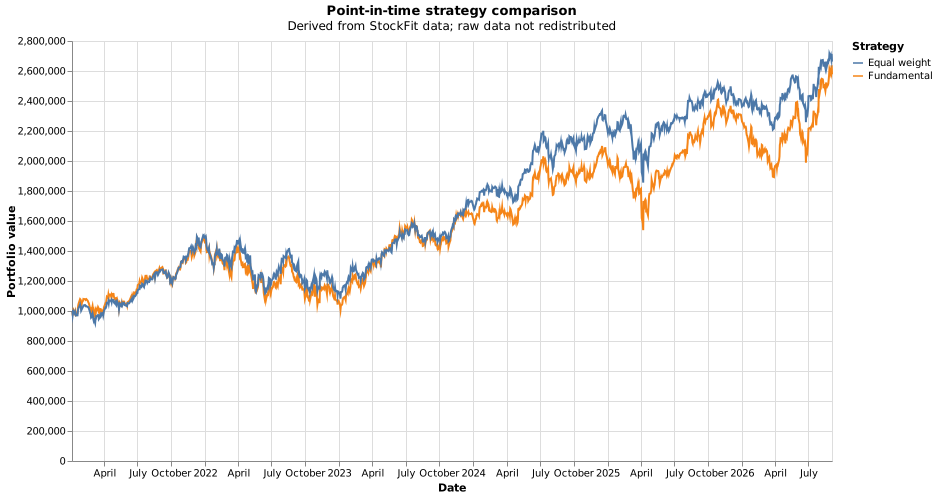
The three-stock fundamental portfolio and its equal-weight comparator used the same dates, decision schedule and starting capital. The fundamental rule returned 157.80% with a 0.67 Sharpe ratio; the comparator returned 166.27% with a 0.82 Sharpe ratio.
Evidence 02
Audit the inputs before trusting the output
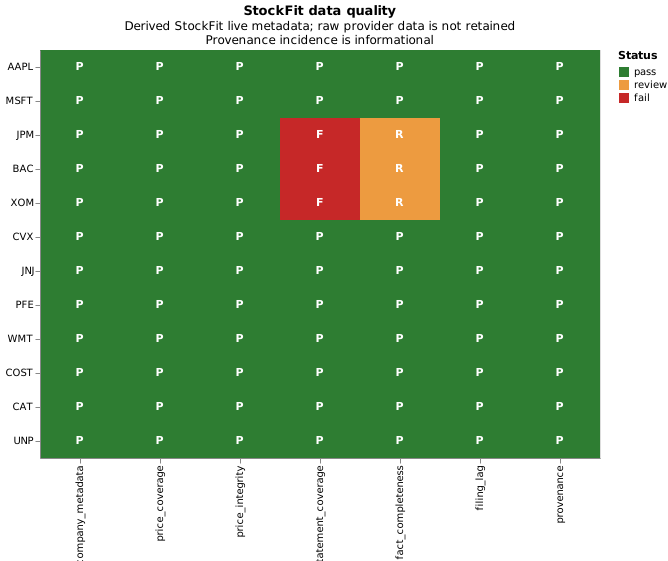
A frozen twelve-company cohort was assessed against predeclared coverage, completeness, filing-timing and provenance checks. Nine companies passed; JPM, BAC and XOM failed narrow checks in the returned trial data.
What this does not claim
This is not evidence of investment alpha. The backtest uses three current tickers and omits costs, spread, slippage, liquidity, taxes and market impact. The twelve-company audit cannot certify provider-wide quality, and neither cohort reconstructs a historical investment universe.
Engineering takeaway
Data timing and data quality belong inside strategy logic. Narrow interfaces and pure transformations make restatements, missing facts and incomplete sector coverage testable without repeated live calls, while a matched comparator keeps the result interpretable.